
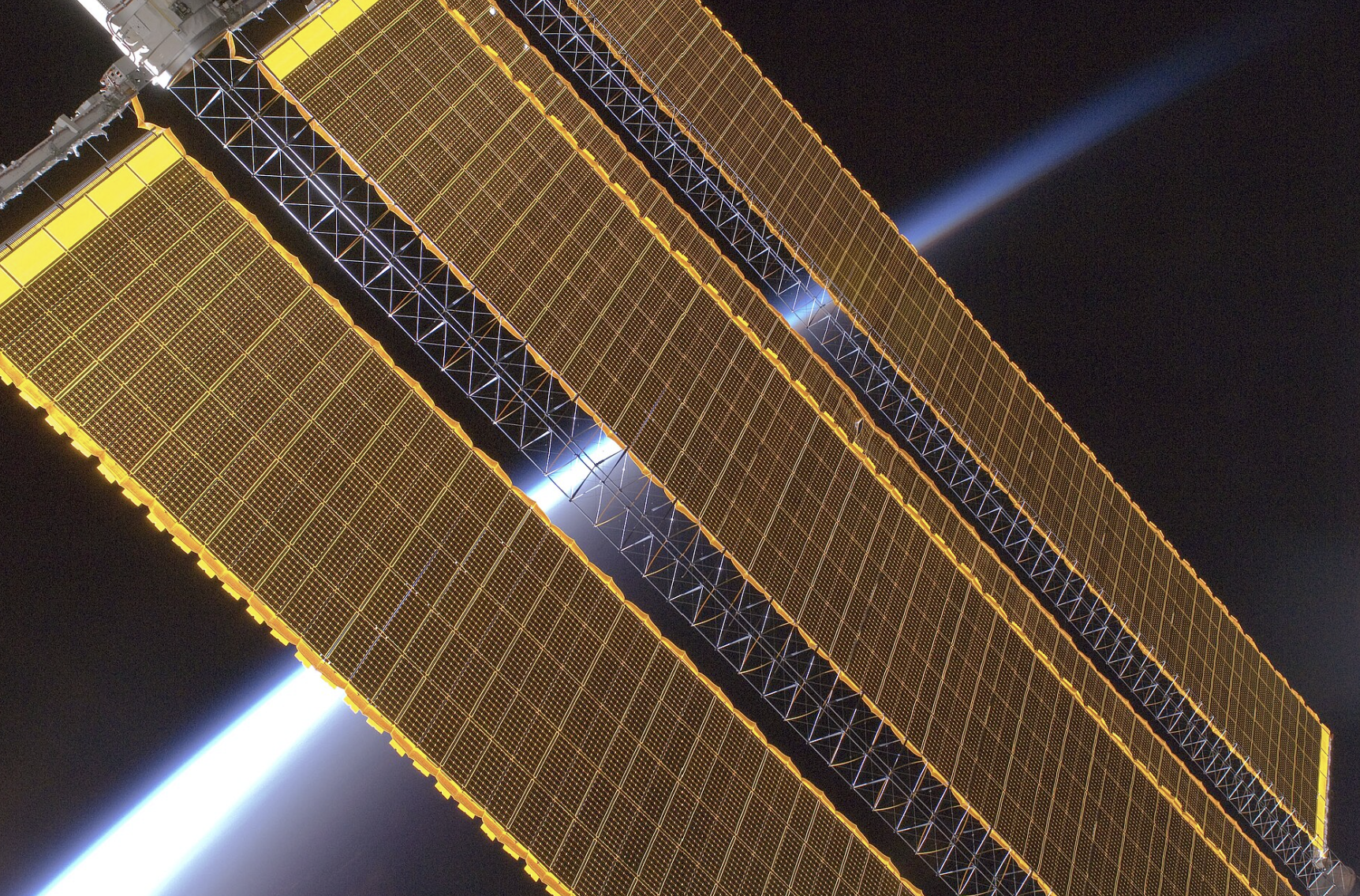
Could space become the next frontier for artificial intelligence infrastructure? Elon Musk’s suggestion that data centres could operate in orbit has sparked considerable debate. But when we examine the physics of solar energy, radiative cooling and the economics of launching hardware into space, the idea may not be as far-fetched as it first appears.
The rapid growth of artificial intelligence is creating unprecedented demand for computing power and electricity. Modern hyperscale data centres consume hundreds of megawatts, while some proposed facilities are approaching gigawatt-scale power requirements.
This growing demand is placing considerable pressure on electricity grids, energy infrastructure and cooling resources. Against this backdrop, Elon Musk has suggested moving data centres into space, where solar energy is abundant and terrestrial infrastructure constraints can potentially be avoided.
However, critics have questioned whether such facilities could generate sufficient electricity or reject the enormous amounts of heat produced by computing equipment.
To investigate the feasibility, let’s consider a hypothetical one-gigawatt (1 GW) data centre in orbit and examine its energy requirements, cooling infrastructure, mass and potential cost.
Harnessing Solar Energy in Space
One of the greatest advantages of operating a data centre in space is access to solar energy.
Solar irradiation just outside Earth’s atmosphere is approximately 1,361 watts per square metre, compared with the 1,000 W/m² reference irradiance commonly used for testing terrestrial solar panels.
Furthermore, spacecraft use advanced multi-junction photovoltaic cells rather than conventional rooftop silicon panels.
Boeing’s Spectrolab, for example, manufactures space-grade solar cells with efficiencies exceeding 30%. While efficiencies of around 40% have been demonstrated in specialist solar-cell technologies, commercially available space-grade cells provide a more realistic basis for our calculations.
How Many Solar Panels Would a 1 GW Data Centre Need?
Suppose our data centre requires one gigawatt of continuous electrical power.
Allowing for operational margins and electrical losses, we assume a solar-array rated capacity of 1.2 GW.
Using solar cells with 32% efficiency, an irradiation of 1,361 W/m² and an assumed overall derating factor of 85%, the required collecting area becomes:
Solar-panel area ≈ 3.24 million m², or 3.24 km².
For comparison, using conventional 20%-efficient panels would increase the required area to approximately 5.2 km².
| Solar-cell efficiency | Required collecting area |
|---|---|
| 20% | 5.19 km² |
| 32% | 3.24 km² |
| 40% | 2.59 km² |
The 40% case represents an optimistic advanced-technology scenario, rather than the performance of a typical commercially deployed space array.
These areas are substantial, but not necessarily prohibitive for a large constellation of interconnected satellites.
Another potential advantage is the availability of sunlight. Satellites in carefully selected dawn-dusk sun-synchronous orbits can receive sunlight for most of their orbital periods, significantly reducing the energy-storage requirements compared with terrestrial solar installations.
However, orbital eclipses, seasonal variations, electrical losses and degradation of the solar arrays must still be considered.
Ultimately, solar energy availability may not be the fundamental obstacle. The larger challenge is manufacturing and deploying sufficiently lightweight solar infrastructure.
Can Data Centres Be Cooled in the Vacuum of Space?
One of the most frequently cited objections to orbital data centres concerns cooling.
On Earth, data centres rely on air cooling, liquid cooling and other heat-rejection systems. In the vacuum of space, there is no surrounding atmosphere to carry heat away through convection.
But this does not mean cooling is impossible.
Heat can be transferred through conduction, convection and radiation. Unlike convection, thermal radiation does not require a surrounding medium.
Spacecraft have relied on radiative cooling for decades. The International Space Station, for example, uses coolant loops and external radiator panels to reject excess heat.
The question is whether this approach can be scaled to a gigawatt-class data centre.
Calculating the Radiator Area
Almost all the electrical energy consumed by a data centre eventually becomes heat. A one-gigawatt facility would therefore need to reject approximately one gigawatt of thermal energy.
The Stefan–Boltzmann equation describes the thermal radiation emitted by a surface:
Q = εσAT⁴
Where:
- Q is the radiated thermal power.
- ε is the surface emissivity.
- σ is the Stefan–Boltzmann constant.
- A is the effective radiating surface area.
- T is the absolute temperature in kelvin.
Assuming an emissivity of 0.9 and a radiator temperature of 47°C (320 K), each square metre can emit approximately 535 watts under ideal conditions.
To reject one gigawatt of waste heat, the data centre would therefore require:
Effective radiating area ≈ 1.87 million m², or 1.87 km².
If both sides of the radiator panels can effectively radiate heat into space, the physical panel area could be approximately 0.94 km².
Radiator temperature also has a substantial influence on the required area.
| Radiator temperature | Effective radiating area |
|---|---|
| 27°C | 2.42 km² |
| 47°C | 1.87 km² |
| 77°C | 1.31 km² |
Increasing radiator temperature from 27°C to 77°C reduces the required emitting area by approximately 46%.
However, higher radiator temperatures can introduce challenges for processor cooling and overall computing efficiency.
These simplified calculations also assume that the radiators have a clear view of cold space. In practice, they must be configured to minimise incoming solar radiation and heat absorbed from Earth.
The conclusion is that radiative cooling can work in space, but building sufficiently lightweight, high-performance radiator systems is a major engineering challenge.
How Much Would a Space-Based Data Centre Weigh?
The feasibility of orbital data centres depends heavily on infrastructure mass.
Unlike terrestrial facilities, virtually every component must be transported into orbit, making the specific power and mass of the energy and cooling systems particularly important.
Solar-Array Mass
A useful metric for spacecraft solar arrays is specific power, expressed in watts per kilogram.
Assuming advanced solar-array systems deliver between 100 and 200 W/kg of rated power, a 1.2 GW installation would require approximately:
6,000–12,000 tonnes of solar infrastructure.
Radiator Mass
Radiators would add substantial additional mass.
Assuming a complete double-sided radiator system weighing between 2 and 5 kg per square metre of physical panel area, the approximately 0.94 km² installation would weigh:
1,900–4,700 tonnes.
These figures are illustrative assumptions for future lightweight systems, rather than specifications of an existing gigawatt-scale radiator.
The facility would also require computing hardware, GPUs, electrical equipment, cooling pumps, networking systems, structural supports and radiation protection.
For our economic analysis, we will assume a total orbital infrastructure mass of approximately 20,000 tonnes.
Rather than launching one enormous spacecraft, a more practical approach could involve a constellation of smaller computing satellites connected through high-speed optical communication links.
Such an architecture would allow gradual expansion and provide redundancy, although it would introduce additional challenges involving networking, synchronisation and satellite management.
How Much Would It Cost to Launch a Data Centre into Space?
This is where the economics become particularly challenging.
Our hypothetical facility has a mass of 20,000 tonnes, equivalent to 20 million kilograms.
The transportation cost depends on how cheaply rockets can deliver payloads into orbit.
| Launch cost | Total transportation cost |
|---|---|
| $1,500/kg | $30 billion |
| $500/kg | $10 billion |
| $200/kg | $4 billion |
| $100/kg | $2 billion |
These figures illustrate the potential impact of reusable launch vehicles.
SpaceX’s Starship programme is particularly relevant because it aims to dramatically reduce the cost of transporting large payloads into orbit.
However, the lowest launch-cost scenarios remain ambitious projections rather than established commercial prices.
And transportation represents only part of the investment.
The data centre would still require thousands of tonnes of specialised solar arrays, radiators, processors, communication hardware and spacecraft structures.
Manufacturing and maintaining this equipment could be significantly more expensive than building equivalent infrastructure on Earth.
Can Orbital Data Centres Compete with Terrestrial Facilities?
To evaluate their commercial prospects, it is useful to compare orbital data centres with their terrestrial counterparts.
A one-gigawatt data centre operating continuously would consume:
8.76 billion kWh of electricity annually.
At an assumed electricity price of $0.05 per kWh, the annual electricity bill would be approximately:
$438 million per year, or $4.38 billion over ten years.
In space, sunlight itself is free, but the infrastructure required to convert it into usable electricity has a substantial upfront cost.
There are also additional challenges that terrestrial data centres generally face to a lesser extent.
Radiation can damage sensitive electronics, orbital debris presents collision risks, and repairing or replacing equipment in orbit is significantly more complicated.
This last point is particularly important for AI computing.
Modern GPUs advance rapidly, and processors can become commercially outdated long before the infrastructure supporting them reaches the end of its operational life.
A terrestrial operator can upgrade servers relatively easily. An orbital data-centre operator may need to launch replacement computing modules or even entire satellites.
There are also communication requirements. Moving large volumes of data between Earth and orbit would demand high-capacity optical or radio-frequency links, while workloads requiring low latency could be less suitable for space-based processing.
Consequently, any comparison must account for the complete lifecycle costs, rather than simply contrasting free solar energy with terrestrial electricity bills.
Could Smaller Orbital Computing Satellites Be the First Step?
Rather than immediately attempting to build a gigawatt-scale orbital facility, a more practical starting point could be small, modular computing satellites.
For example, a spacecraft equipped with tens or hundreds of kilowatts of computing capacity would require solar arrays and radiators on a much more manageable scale.
These satellites could serve a particularly interesting market: processing data that is already generated in space.
Earth-observation satellites produce enormous amounts of imagery and sensor data. Instead of transmitting all the raw information back to Earth, orbital computing systems could process it locally and send only useful results.
This could reduce communication requirements while creating a commercial use case for computing infrastructure in orbit.
Over time, improvements in reusable launch vehicles, lightweight solar arrays, radiator technology and energy-efficient processors could make larger facilities more attractive.
Final Verdict: Are Space-Based Data Centres Feasible?
From a fundamental engineering perspective, there is no reason why data centres cannot operate in space.
Advanced multi-junction solar cells offer high conversion efficiencies, while carefully selected orbits can provide nearly continuous sunlight.
Radiative cooling, despite being frequently misunderstood, is already an established spacecraft technology. The challenge lies in scaling it to reject hundreds of megawatts or even gigawatts of waste heat without creating prohibitively heavy infrastructure.
Our hypothetical one-gigawatt data centre illustrates the scale of the challenge: approximately 3.2 km² of solar collecting area, 1.9 km² of effective radiator area and potentially tens of thousands of tonnes of orbital hardware.
Even with dramatic reductions in launch costs, the economics remain uncertain.
For specialised applications such as processing satellite imagery, orbital computing could become increasingly attractive. But competing directly with terrestrial hyperscale data centres will require substantial advances in lightweight infrastructure, launch economics and hardware reliability.
The real question is not whether we can build data centres in space. It is whether we can build and operate them cheaply enough to make economic sense.
And that is likely to determine whether Elon Musk’s vision becomes the next major industry in space or remains an ambitious engineering concept.