
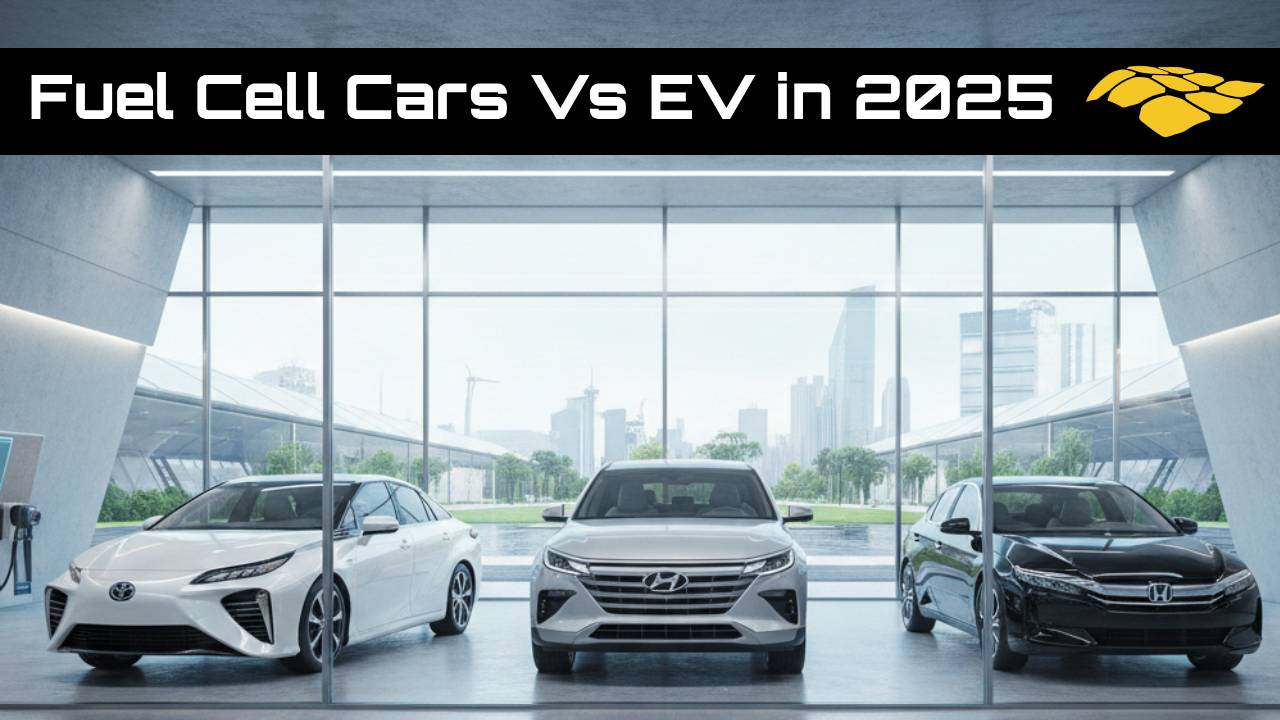
Fuel-cell electric vehicles (FCEVs) have long occupied a strange middle ground in the automotive world. On paper, they offer an enticing combination: long driving range, zero tailpipe emissions, and refueling times measured in minutes rather than hours. In practice, however, high costs, limited infrastructure, and weak economies of scale have kept them on the fringe of the global vehicle market.
A Market That Keeps Shrinking
The numbers tell a sobering story. In 2024, fewer than 13,000 FCEVs were registered worldwide. In 2025, registrations fell even further to just 8,970 units. That figure looks especially stark when compared with battery electric vehicles (BEVs): roughly 20 million BEVs were produced in 2025 alone.
Economies of scale are clearly not working in favor of fuel-cell vehicles. Most global FCEV registrations occur in the United States, and overwhelmingly in California. Across the entire U.S., there are only 89 public hydrogen refueling stations, and 74 of them are located in California. Outside that narrow geographic footprint, owning an FCEV is largely impractical.
Why FCEVs Are So Expensive
Compared with BEVs, FCEVs face cost challenges on multiple fronts. Fuel-cell stacks themselves remain expensive to manufacture, requiring precious metals and complex systems. On top of that, hydrogen must be stored at extremely high pressures, which necessitates costly carbon-fiber reinforced tanks that add both expense and engineering complexity.
As a result, very few automakers have attempted to produce FCEVs at any meaningful scale.
The Two Main Players: Toyota and Hyundai
To date, only two major automakers have released passenger FCEVs in notable volumes:
- Toyota, with the Toyota Mirai
- Hyundai, with the Hyundai NEXO
The 2025 Toyota Mirai carries a U.S. MSRP of around $52,900 for its single XLE trim. In California, however, generous incentives—including hydrogen fuel credits and manufacturer discounts—can reduce the effective price to as low as $17,000–$24,000. While this makes the Mirai surprisingly affordable on paper, its availability remains tightly limited to regions with hydrogen infrastructure.
The Hyundai NEXO, a midsize hydrogen fuel-cell SUV, typically starts between $60,000 and $63,000, depending on trim and model year. Like the Mirai, it is sold almost exclusively in California. Even with incentives or used-vehicle discounts, the upfront price remains high for most buyers.
Profitability: Mostly a Strategic Loss
It is widely assumed that Toyota does not make a profit on the Mirai and likely incurs significant losses on each vehicle sold. Toyota has publicly acknowledged that the Mirai has “not been successful.” Industry observers believe Hyundai faces a similar situation with the NEXO: the vehicle is not a mass-market product, and hydrogen fuel-cell technology remains heavily subsidized and developmental.
In short, these vehicles are best understood as strategic investments rather than profit-driven products.
Operating Costs: Competitive, but Not Better
On a cost-per-mile basis, BEVs usually have the advantage. Depending on charging method, battery electric vehicles typically cost 4 to 28 cents per mile to operate—ranging from inexpensive off-peak home charging to costly fast public chargers.
FCEVs generally fall in the 16 to 27 cents per mile range. That makes them competitive in some scenarios, but rarely cheaper than BEVs, especially as battery charging infrastructure continues to expand and improve.
China’s Different Approach
Several companies in China are also producing FCEVs, but their focus is largely on commercial and heavy-duty vehicles, not passenger cars. The Chinese government has promoted hydrogen as a strategic technology, publishing a roadmap that targeted 50,000 FCEVs by 2025.
While actual deployment as of late 2024 has fallen short of that goal, the policy direction reflects a belief that fuel cells make more sense for long-haul trucking, buses, and industrial applications—where fast refueling and long range matter more than vehicle cost.
Signs of Progress in 2025
Despite the headwinds, 2025 has brought several encouraging developments:
- Toyota unveiled its third-generation fuel-cell system, offering improved efficiency, durability, and performance.
- The company is also supporting the expansion of hydrogen refueling corridors and advancing fueling technologies such as dual-flow dispensers that can serve both light- and heavy-duty vehicles.
- Honda introduced a next-generation fuel-cell module with more than double the durability, roughly half the cost, and a threefold increase in volumetric power density.
- Hyundai revealed a revised and improved version of the NEXO, signaling continued commitment to the segment.
The Long View on Hydrogen
For now, fuel-cell electric vehicles remain a niche solution, constrained by high costs, limited infrastructure, and weak consumer demand. Battery electric vehicles dominate the zero-emissions market, and their advantages continue to grow.
Still, major automakers appear unwilling to abandon hydrogen entirely. Instead, they are maintaining a strategic foothold—developing technology, refining systems, and supporting limited infrastructure—so that if hydrogen does emerge as a dominant fuel of the future, they will already be prepared.
In that sense, FCEVs may not be the cars of today, but they remain a bet on what transportation might look like tomorrow.